Tuesday, June 6, 2006

Eagle Aerobatics in Norway Day 2

June 6

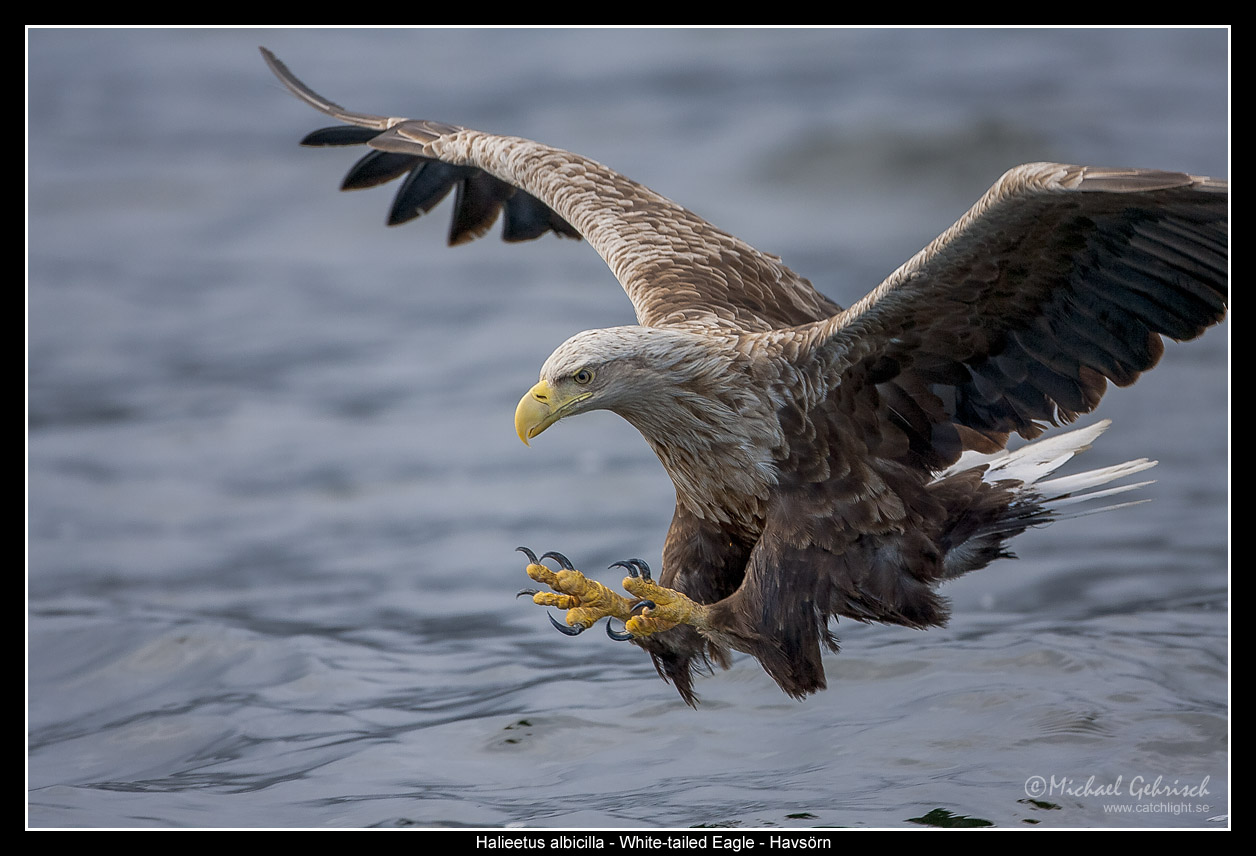
Day one of our eagle photography in Lauvsnes, Norway was beyond our wildest expectations with 24 close displays by the eagles. Even Ole-Martin our guide was impressed since that tied his earlier record. Day two proved to be a more normal day with about 10 fly-bys. But since we already had hundreds of great images this gave us a little more time to catch our breath and and enjoy the beautiful scenery. Norway has a reputation for it's stunning landscapes and fjords, and we were not disappointed.


So after another incredibly successful day there was only one cloud on the horizon, and that was the weather forecast which called for strong winds the next day. Being somewhat prone to sea-sickness Johan and I took this as an invitation to photograph something on land the next day, and we decided to make a short 8 hour drive to the Island of Runde for a couple of days before heading home to Sweden.

Monday, June 5, 2006

Eagle Aerobatics in Norway - Day 1

June 5

Our Norwegian sea-eagle adventure began when Swedish bird photographer/bird watcher C.G. Gustavsson contacted me out of the blue back in November and asked if I would be interested in sharing the costs for a session with Norway's most famous eagle guide Ole Martin Dahle. It took us about 3 seconds to make up our minds. So after seven long months of waiting Johan (12) and I touched down with SAS in Trondheim picked up our rental car and began the three hour drive north. This was somewhat of a budget arrangement, outside of the normal guiding season and schedule which meant we had budget accommodations as well. Ole-Martin made arrangements with a neighbor who had a rental flat that we could rent; a one bedroom flat with a kitchen, which was just fine with us.

So after getting settled in we made an early night of it and then were up at 6AM to meet Ole-Martin and head for his boat and to meet his good friends the sea-eagles.
Johan and I used the Canon 500/4IS and the 400/5.6, both work well from a distance, but for some of the closer shots a 300/2.8 would have been a better choice with the potential for shallower depth of field and wider field of view.


As you can see there were plenty of eagles, and they seemed to recognize Ole-Martin and his boat. But we also tossed bread to the seagulls on the way out to the eagles territory. The eagles are smart enough to understand that where there is a flock of seagulls there must be food. So from their vantage points several kilometers away they came to see what all the commotion was about.
This was Johan's first effort at serious in-flight photography, but he did brilliantly. You just can't deny that kids have much quicker reflexes than adults, I guess in part from all the computer games.
Later that evening Ole-Martin showed us some of the images made by previous visitors, among them a teenager whose image of a red  squirrel placed in the BBC Wildlife Photographer of the Year contest. This became an inspiration for Johan who consequently placed twice in the Wildlife Photographer of the Year contest, first in 2008 and again in 2010 (see separate post).

Tuesday, March 7, 2006

As the Sun Sinks Slowly into the West

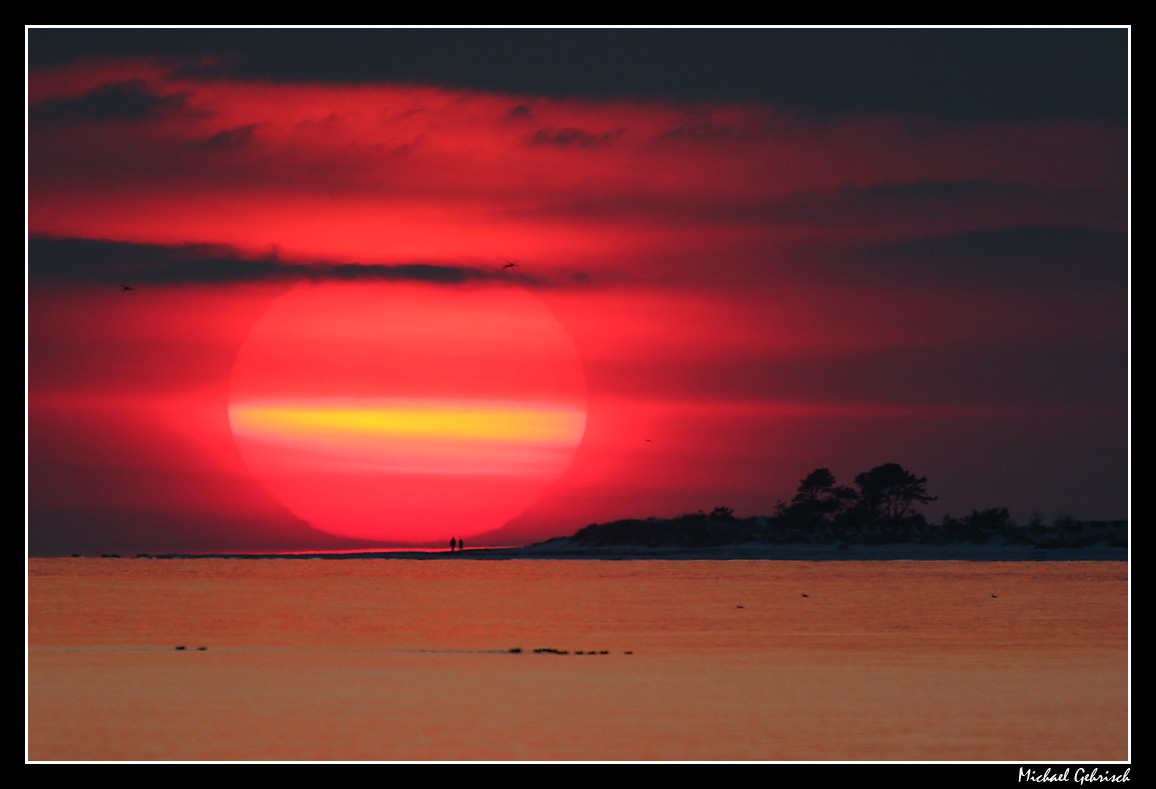
While photographing owls, a gyr falcon and other birds of prey along the South coast of Sweden we ended the day watching a beautiful sunset. Armed with my 500mm lens +1.4extender for a focal length of 700mm, I noticed a couple walking along a shore several kilometers away as the sun set behind them. Just enough clouds to prevent the sun from overexposing the shot, yet not too much to hide the sun and the sunset colors.

 Some times you just get lucky...


Michael Gehrisch


 Photoblogs.com
 coolphotoblogs my profile

Monday, March 6, 2006

Nature Photography is 90% skill and 90% luck,

March 6, 2006

Due to the exceptionally early and heavy snows in Sweden there was an owl invasion in Southern Sweden. Not an unusual phenomenon, but new for Johan (13)  and I. We were used to fighting for a glimpse of an owl at sunrise or sunset, or seeing the few resident owls in the botanical garden in Lund sticking their heads out from their nest box. You could almost hear them laughing at us. It was not a pretty picture.

But this winter was different. Owls could be found at any hour of the day, sitting on fence post, sitting on the ground,or hunting along the coast where there was a small stretch of open ground where the sea water melted the snow. Johan and I used this knowledge and managed to take quite a few decent owl shots during this winter. But the best shot of the winter was just plain dumb luck. After ten hours in the field from 7:30AM to 5:30PM we had a few so-so shots of owls and a gyr falcon. So at 5:30 I decided we had had enough and pulled the car over to the side of the road intending to turn the car around and head for home as soon as the cars behind us passed. After a few seconds Johan spoke up from the passenger seat, "Aren't you going to photograph him?"
"Who?" I responded.
And then Johan pointed to the short-eared owls sitting on the fence post directly across from us on the other side of the street, which was why Johan assumed we had pulled over. Panic! Get the camera, check the sittings, turn of the car, turn off the radio, roll down the window, DON'T SCARE THE OWL! And then slowly, agonizingly slowly move the camera into position and start shooting.


And then the owl was gone, and we pulled around and headed for home. The day went from being mediocre to being great, all it took was two minutes with a short-eared owl.

Sunday, February 6, 2005

The Coolest Spot in Sweden

Our good friends Aurelie and Aurelién, two graduate students from France spent a lot of their free time travelling around Sweden, Scandinavia and Northern Europe. I'm pretty sure they have seen more of Sweden than most Swedes. But being a "immigrant" myself I suggested the most exotic trip that I could imagine; a trip to the Ice Hotel in Jukkasjärvi followed by a trip to the 400th annual Jokkmokks marknad the first weekend in February.They were up for the adventure and we booked a flight to Kiruna, the nearest town where we rented a car. We spent the first day in Jukkasjärvi visiting the Ice Hotel, which is open for visitors until 5PM when the guests get to move into the rooms.

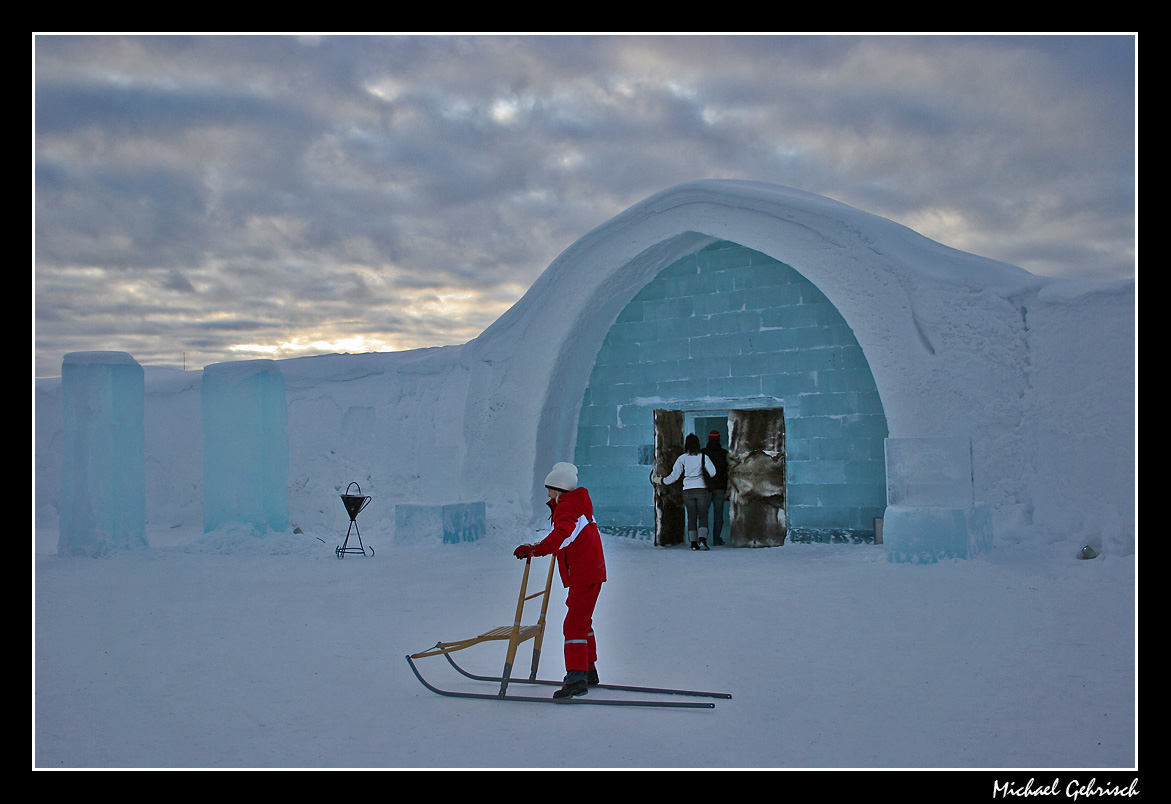
The entrance to the Ice Hotel, Kristina on a "spark"(Swedish for kick) the traditional transportation
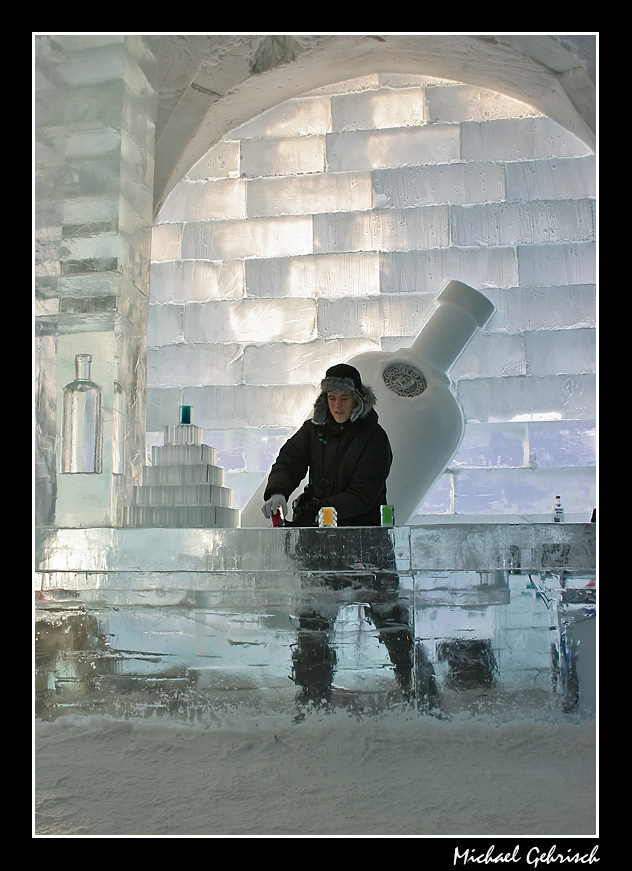
Guest bartender Aurelien
Check-in for hotel guests is 5PM, during the day visitors are allowed to view all the suites and rooms in the Hotel.
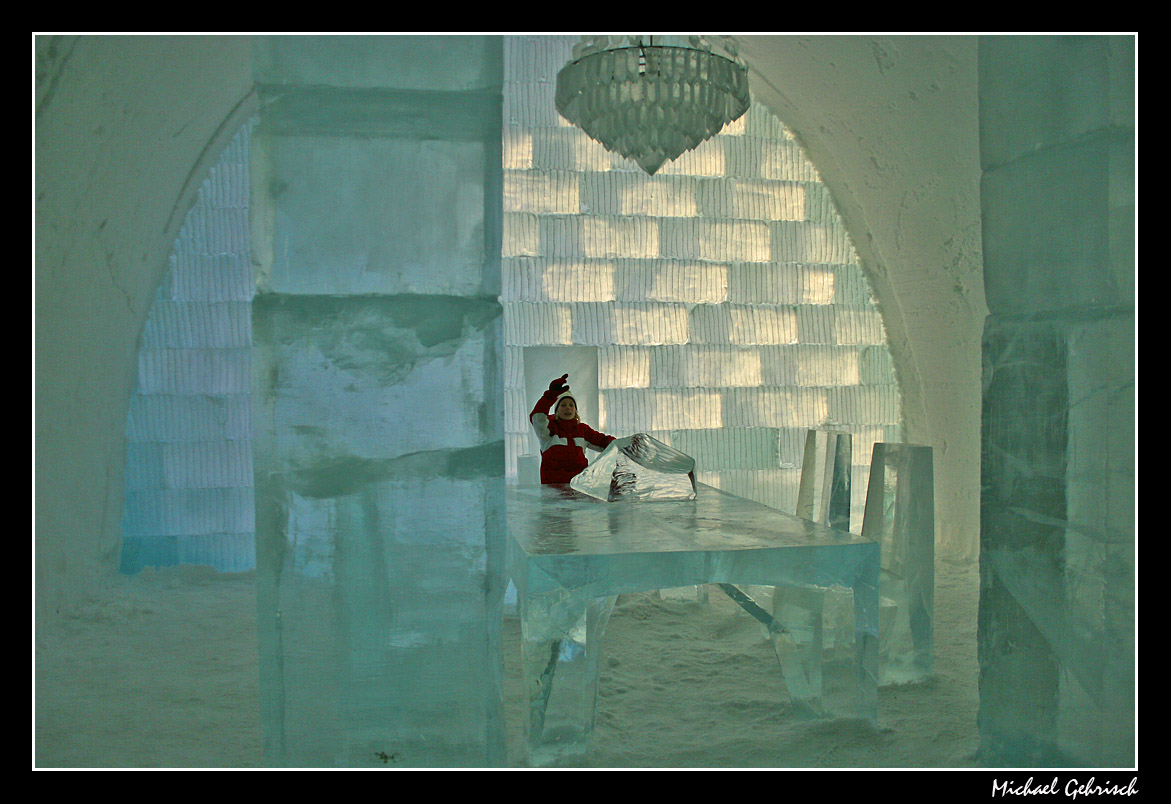
The chandelier, chairs and drinking glasses are made of ice
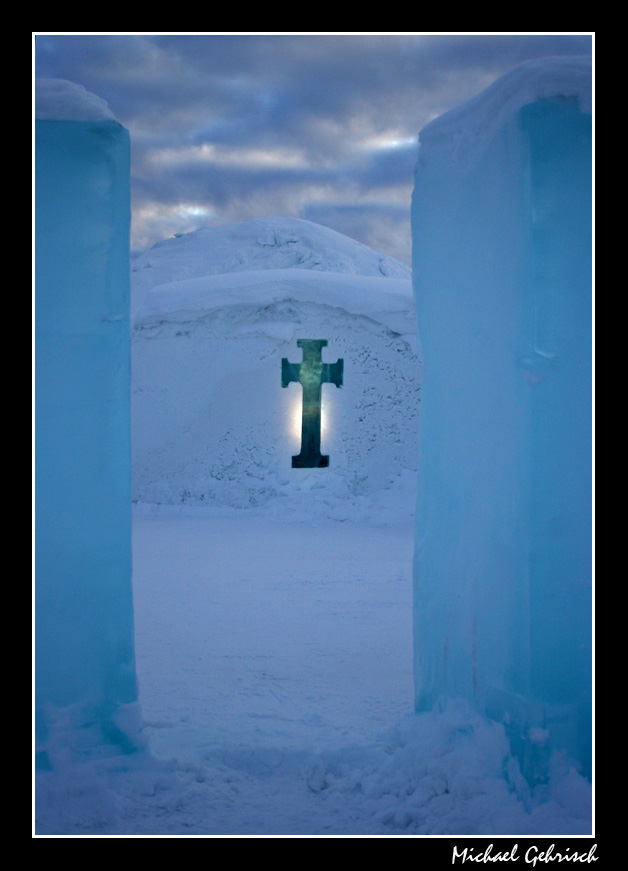
There is even an Ice Chapel where you can get married, or simply enjoy the peace and quiet.
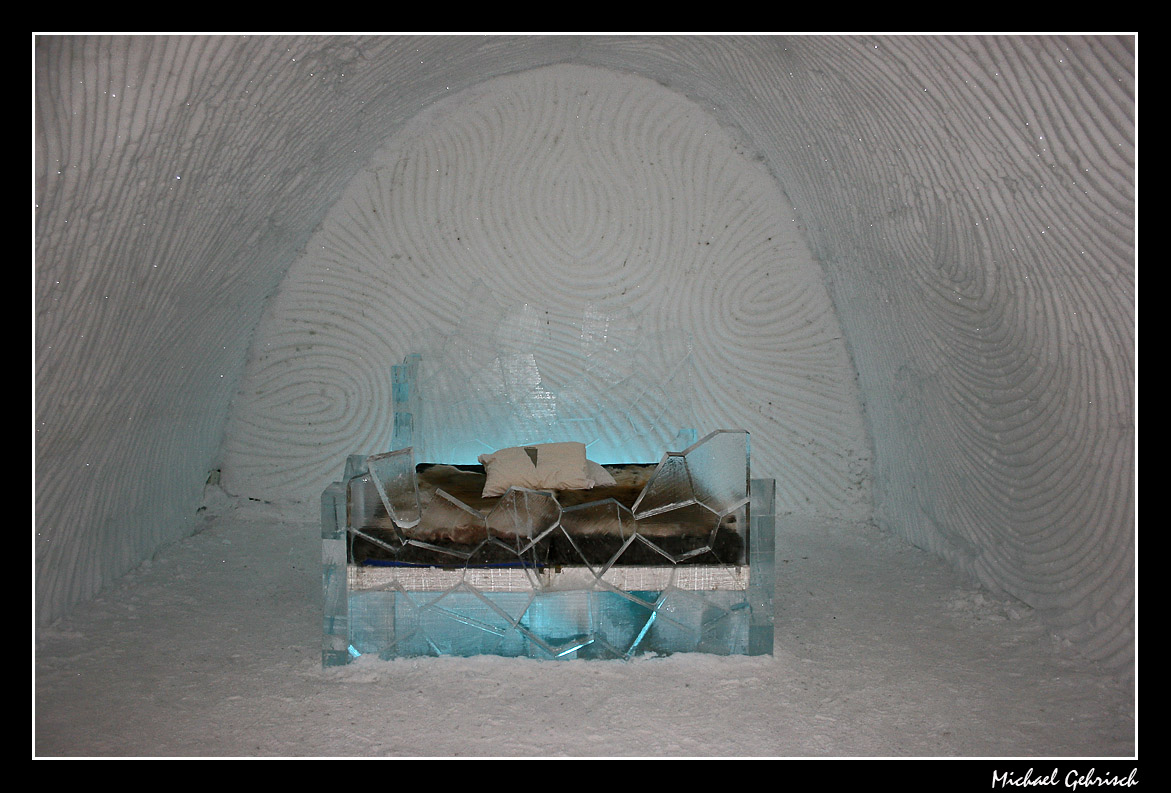
Bed formed as a dog sled, pulled by dogs of ice

After spending a couple of hours in the Ice Hotel we made the three hour drive to Jokkmokk to explore the market.
Traditional Sami festival clothing
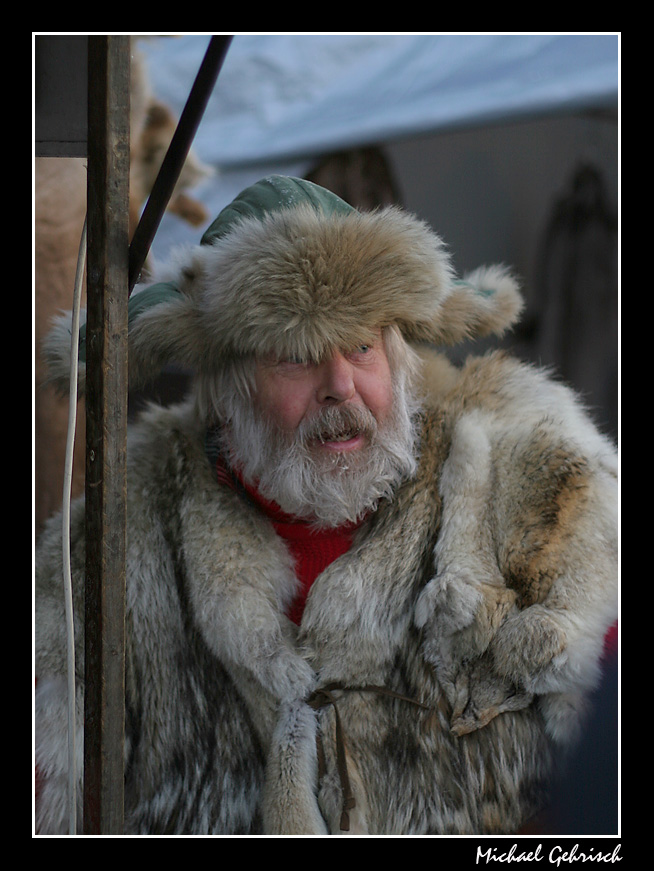
Wild Hasse, one of the traditional participants
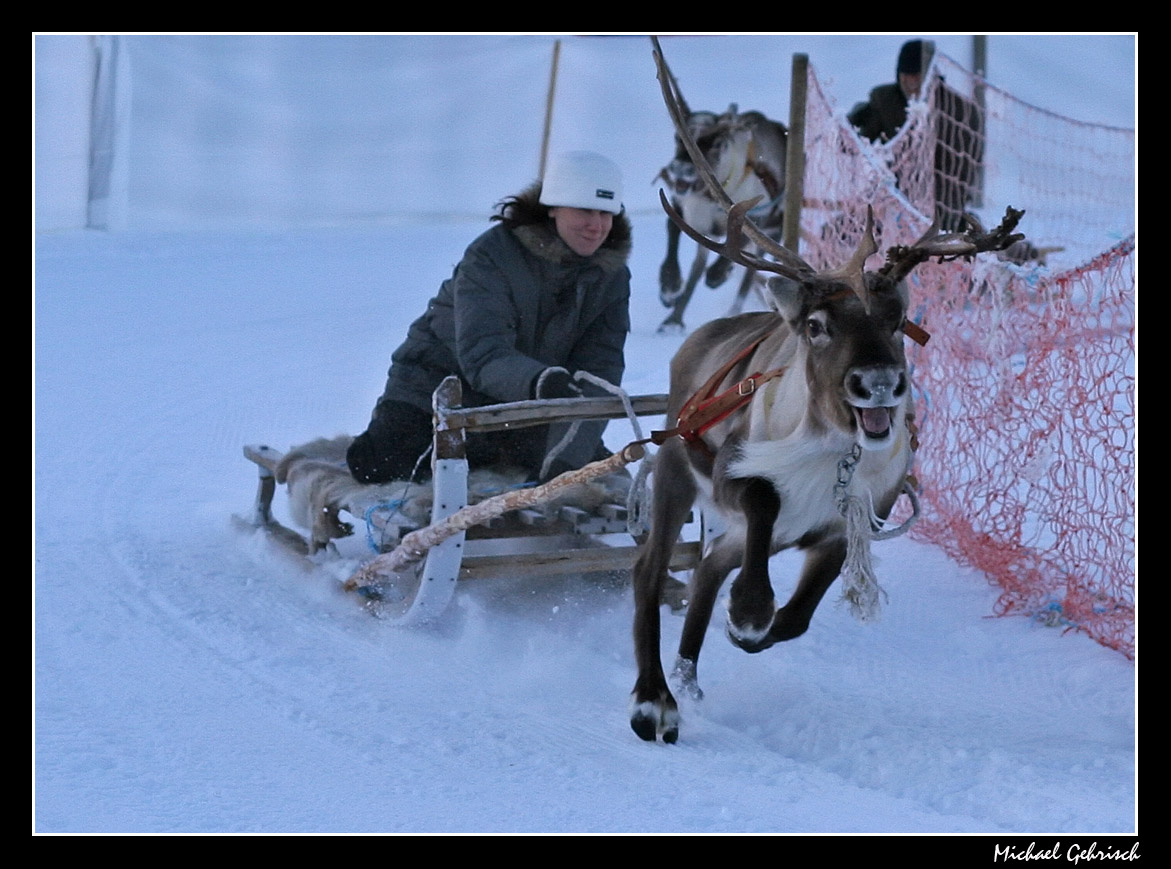
reindeer racing in Jokkmokk

After leaving the Ice Hotel in the afternoon we headed towards Jokkmokk for the 400th annual Sami market. Jokkmokk which normally has 3000 residents, swells to 30,000 during the market making finding accommodations a bit of a challenge. We wound up staying in a sleeper compartment of a train parked in town. 5 people with baggage in a compartment for 6, it was cozy to say the least.

The Samis are the indigenous people of the Arctic region called Sapmi which includes Northern Norway, Sweden, Finland and the Kola peninsula of Russia. One of their main livlihoods throughout history has been reindeer herding, and reindeer is not only a chief source of nuturition and hides, but also a source of material for some of the most exquisite handcraft you can imagine. The primary materials are reindeer horn, birch burl and reindeer skins, and during the Jokkmokks marknad you can see the crafts from many different artists on display at Ájtte the local museum and school.

It was difficult to photograph the crafts, so I would suggest a visit to one of the many sites that do this, such as Risfjell.
One of the foremost Sami artists is Erik Fankki who has his own website with a gallery of his work.

Although it's rather cold in this part of Sweden in February, the humidity is very low, and it is usually not windy, so it is quite bearable with the right clothes, and if you're lucky you might be able to see the Northern Lights.

More images from this trip can be seen at my website